
20/08/2022
Watch the one minute film “Shell Pasta” here
“A film has to compress a considerable amount of narrative into a small space”
– Kim Jong Il, On The Art of Cinema
These are the notes I made for making a film with my 2 year old daughter, taking inspiration from On The Art of Cinema:
- “Compose the plot correctly”: ask Liba what the plot should be (tell me a story)
- “Themes should be treated in such a way as to enhance their political importance”: for consideration
- “Each scene must be dramatic”: read this chapter so that it doesn’t conflict with next point
- “Begin on a small scale and end grandly”
- “The mood must be expressed well”
- “Which makes a work a masterpiece, its scale or its content?”
- “A film without music is incomplete. Music should be appropriate to the scene. A melody should be unique.”
- “Revolutionary creative practice requires a new system for guiding the creative process”: ignore this
- “Before acting he should understand life”: failed
- “The quality of acting lies in the director”: a lot of responsibility here
- “The director should clearly define emotions”
- “Best use should be made of music and sound”
- “The secret of directing lies in editing”
- “All characters should be subordinate to the main character”
- Seed Theory. What “seeds” (ideologies) do Liba and I have in common? What common beliefs?
- “An artistic work which mirrors a noble and beautiful life truthfully and richly, gives the people great strength in their practical struggle to transform nature and society” – I would like our relationship to nature to be transformed so I’ll study this advice.
Thoughts on using Kim Jong Il’s text as inspiration
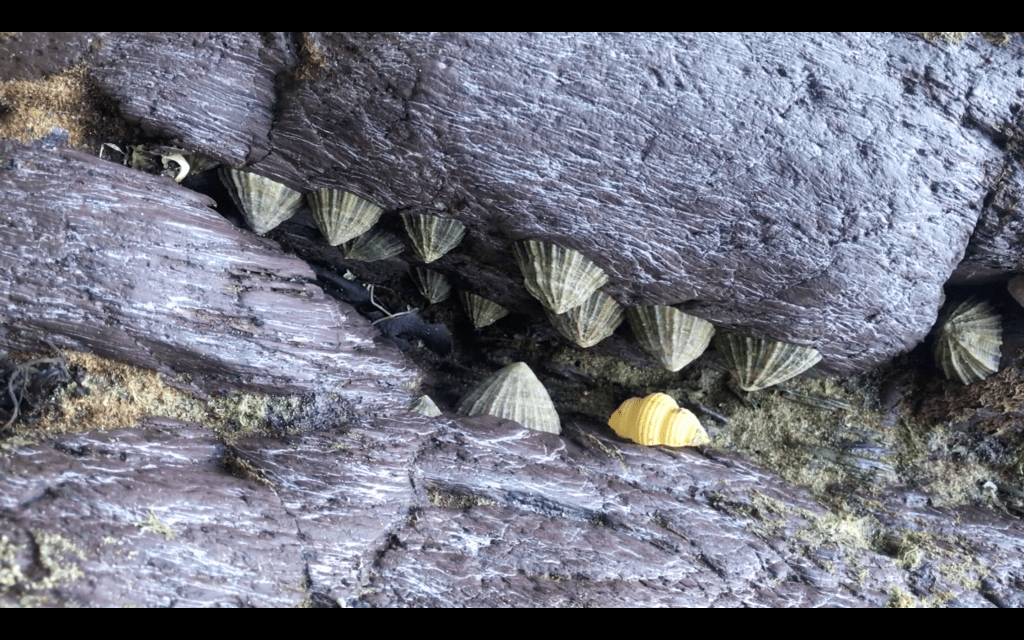
Liba picked up a bag of conchiglie pasta and said “we got this from the beach”, and this novel piece of toddler insight became the premise of the film, which fell together nicely despite our occasional creative differences such as her initial resistance to getting the pasta wet. Liba always challenges me to slow down, which is against my nature but certainly a lesson I’m trying to adopt.
Before Liba came up with the concept for the film I felt like I needed a starting point, some sort of direction to kick off with. The instruction I’d given myself – ‘to collaborate with my toddler on making a film’ felt vast and ungrounded. She isn’t the kind of collaborator I’ve worked with before; being unable to input equally into what we were doing and being liable to refuse to work together at all. I envisioned going to a park with her to just film for hours and see what happened, but then I remembered I had this book.
Kim J is known as a frustrated filmmaker who owned one of the largest private film collections in the world. He instructed the entire North Korean film industry to read On the Art of Cinema in the hopes that they would start winning international competitions, but it has been said to have had little influence on NK film making. This presumably has something to do with NK creators having to adhere to strict political ideologies at the risk of death which were at odds with the common and topical subjects the rest of the world’s cinema dealt with.
My interest in acquiring the book in the first place is related to an interest in out-there theories in general, the kinds of theories propagated often by individuals which may develop dedicated (yet small) followings. Ideas such as flat earth (which become less fun when it became less fringe), hollow earth, Mudfossil University, Bigfoot, and a multitude of 19th century scientific publications that saw theories like the examples below. Authors are usually self-taught and self-appointed experts in their area (as is Kim J in his publication). These are enormously time-consuming passion projects which are sometimes born out of a need to sustain a belief already held, as is particularly the case with Christian authors proposing scientific theories that battle to align contemporary observation and discovery with Biblical scripture. I wouldn’t want to think that readers who hold such beliefs felt ridiculed or persecuted, I just have a personal interest in the place in all our minds where imagination and logic battle it out to bring us to new, private and personal theories or belief systems. Art could be said to fall into this category; don’t artists build worlds and try to convert people into them?

Other favourite passion projects include:
Terra Firma: The Earth Not a Planet, Proved from Scripture, Reason and Fact, by Scott David Wardlaw (1901) – The original anti-globular Earth text. Doesn’t like geologists. Dinosaurs are probably theatrical imaginings from showmen, proof of stone age humans will never be found (“I am certain”), the South Pole doesn’t exist, and the moon does not reflect the sun’s light but emits its own electric light which putrefies food.
Paradise Found, The Cradle of the Human Race at the North Pole. By William F Warren (1885) – Argues that humans originated from the North Pole, largely citing the many ways in which the sight of the night sky at the pole presents us with a central focal point to the universe. It’s a myth that half the year is spent in darkness, and in fact that most of the year is daylight and therefore it is remembered by us as “the home of the sun”.
The Earth’s Annular System; or, The Waters Above the Firmament: Vail, Isaac N., (1912) – “…to show that the Deluge of Noah, and all the “Ice Ages” were caused by the progressive and successive collapse of great world-canopies of aqueous vapor, which were the last remnants of a Saturn-like Ring System or a Jupiter-like “Cloud Ocean,”” More recently criticised as “not serious biblical scholarship.” by a creationist paper due to Vail’s belief in the existence of ‘millions of years’.
Beginning and Way of Life (1919) by Charles Wentworth Littlefield – Over prayer he could influence salts in the blood to crystallise into any form, even once summoning tiny living octopi. He believed this process to be the origin of life, and that one could improve humanity by engineering the quantity and quality of mineral salts in the blood. Heavy white supremacist content. He donated one hundred thousand copies of this book to something called The Rainbow Temple Association, as well as another invention: “as many Rainbow Lamps as are necessary for decorative, experimental, and healing purposes”. Whatever they are.
Pseudodoxia Epidemica: Or, Enquiries Into Commonly Presumed Truths by Sir Thomas Browne (1672) – muses on accepted truths of the time, such as “That Storkes will onely live in Republicks and free States” or “That Hares are both male and female”. Browne appears to reflect on some questions from a very personal vantage point, although the scientific method wasn’t exactly in its prime yet as we can see from the accepted fact that the plant basil “propagates Scorpions”, and you will even grow scorpions in your brain if you smell it too frequently. On the question “That Flies, Bees, &c. Do make that noise or humming sound by their mouth, or as many believe with their wings only”, he claims they will buzz without a head, buzz without wings (if moved through the air), and that “big and lively” ones will buzz without either.
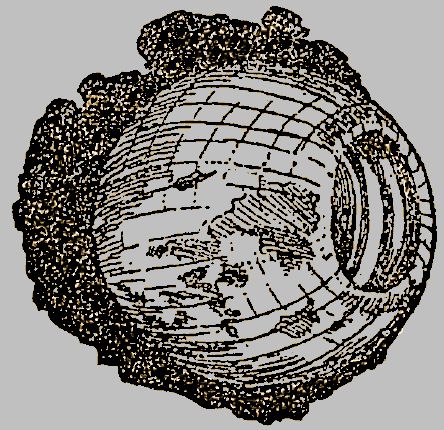
The intrigue is in the dedication to a theory that the author isn’t academically qualified to proclaim themselves an expert in. No objective testing or “scientific method”, no second opinions, only a dogged belief in the correctness of their own opinion despite zero or little formal training in the area (again, relatable as an artist).
There is an interest in belief more generally, which perhaps has something to do with truth, and with storytelling. Humans are story-telling animals, “language is our gift” (as says Robin Wall Kimmerer) and for most of our history it was only spoken; always weaving magic alongside the wisdom that couldn’t be interfered with: the facts about our surroundings that kept us alive were entwined with and bolstered by fantasy. Come the age of late-20th century science in the west where imagination and speculation is outlawed, our intrinsic yearning for stories breaks loose. (As does the Dunning-Kruger effect in the sector of wealthy white males).
Science, as Robin Wall Kimmerer also says in Braiding Sweetgrass (the actual new bible), is a beautiful foundation stone and potential sacred text for the west in engaging with the world, but must be coupled with humility and heart. These two attributes can be felt to be lacking in texts such as the above, which feel more like self-righteous belief systems often rooted in narrow, bigoted and western-entrenched thought patterns. Traits that most contemporary artists like to think themselves as fighting against (so here is where some artists might differ from aspiring cult leaders).
Anyway, involving Liba’s father in Shell Pasta by instructing him to create the score was an unintentional but apt echo of the story of actor Choi Eun-hee and her ex husband and film director Shin Sang-ok being forced to work together on Kim J’s instruction. Except without the kidnap and the stakes of carrying the North Korean film industry on our backs. Lloyd Jones is a musician and his participation felt fitting for centering the film more around Liba.
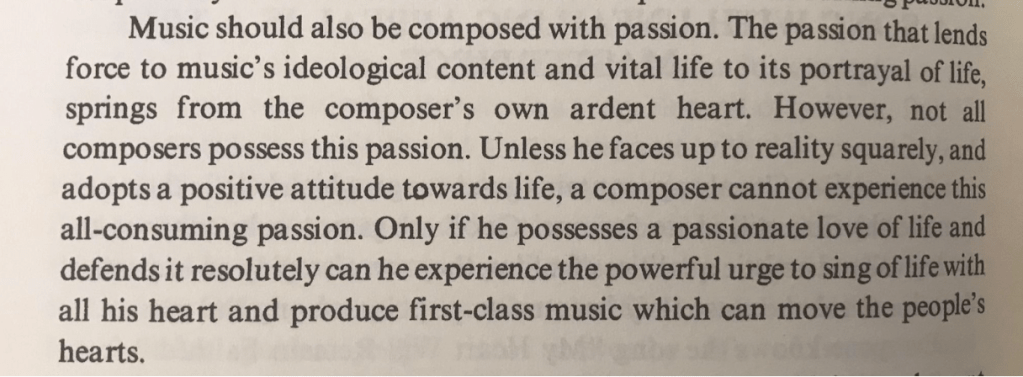
Only on completing the edit and sending it to Lloyd to work on the score did I realise what a crucial part of the film the music is, how empty the visuals were without the grounding of the sound, and what a huge aspect of the film I had passed to someone else’s hands. But I think it worked out nicely. I sent Lloyd the following choice advice from On The Art of Cinema:
- The music for every scene should be exquisite, gentle and positive in tone
- Not too high pitched or dragged out for too long for no reason
- Songs should be beautiful, tender, gentle, and flow smoothly
- A melody should be unique
- Should be appropriate to the scenes
- Should possess profound meaning and powerful emotional content so that they will grip the people and imbue them with unflagging strength and courage
- Should not be too complicated, And lastly this which I don’t want to summarise:
 Thaïs Lenkiewicz