
25/08/2021
There’s an X by your name if they see you eat mackerel from the Sound or collect winkles at Cawsand. There’s a note about a man who collects mussels twice a year from the Lynher. If you use the seaweed to fertilise your allotment, which is close to the dockyard, and you eat the vegetables, then what? I don’t know by what point of a percentage point it increases your risk of cancer. I don’t know. I just know there’s an X if you live on the water, or over mud, or over mud and stone, and if you do water sports. And you don’t even have to swallow the water because it’s in the air. The report says the rates of leukaemia here aren’t high enough to worry about, but they’re higher than comparable cities. My science teacher told me to never so much as put my hand in the Tamar and a friend’s doctor told them we actually have one of the highest child leukaemia rates in Europe, but I don’t know. That’s just hearsay isn’t it. So maybe if you have all 34 X’s by your name; like you eat local honey and blackberries and forage mushrooms and you swim in the sound, maybe it doesn’t increase your chances of getting cancer by very much at all. Maybe a thousandth of a percent even, but I’m not clear at all. I don’t know at what point they get close to illegal levels. I guess that’s the main reason they make these surveys; to make sure. Even if they’re now going to release untreated water directly into the river, I don’t know by how much the exposure increases. But what if you were in the river when the hose burst and the 280ltrs of contaminated water leaked in, and they didn’t tell the council, like every time, or you went fishing? What then? I don’t know. I wish I knew a bit more.
All of this is true. The contents of the zine, maybe not so much.
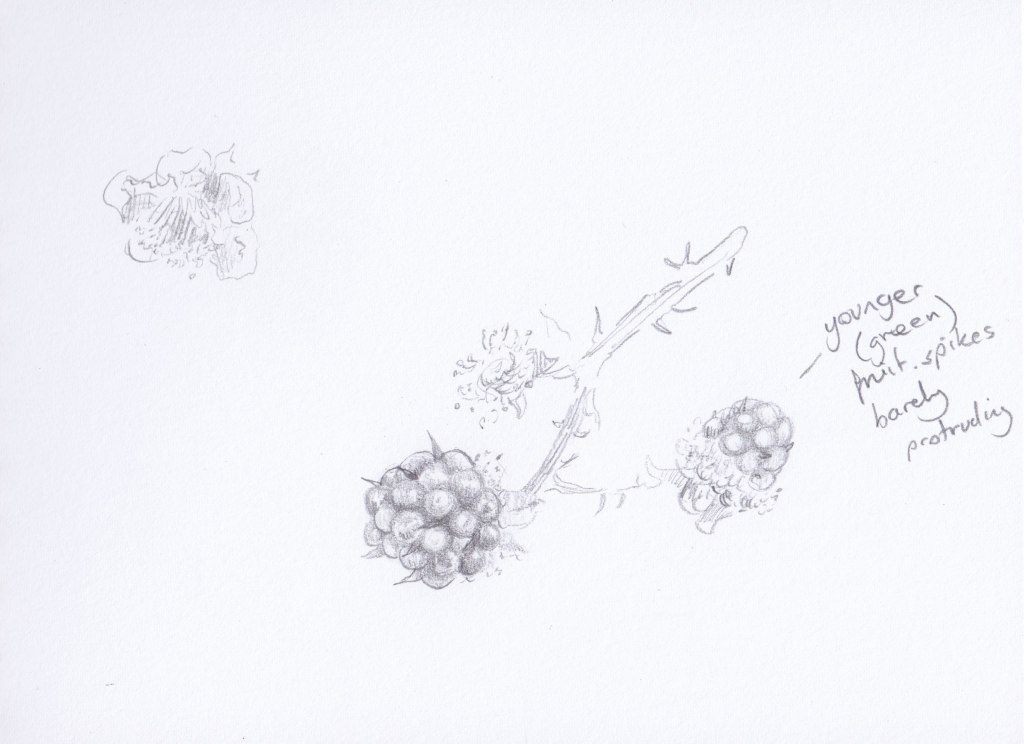
I made this (mostly) fictional zine as a reflection on living near Devonport Dockyard after reading about their proposal to release further contaminants into the river Tamar. The base has faced a lot of criticism over its safety record, and here’s an extract about current active nuclear risks from an article by Scientists for Global Responsibility:
“The fact that the most risky elements of the dismantling and servicing process were excluded from the risk assessments is of serious concern. But what is of even more concern is that these risks were excluded when there are eight aged nuclear reactors berthed in very close proximity to the population of Plymouth.
The potential risks of an accident or incident are rather starkly set out in the Devonport Off-Site Emergency Plan (DOSEP). [10] This plan includes various contingencies such as: exclusion zones of 2 – 10km, the latter enclosing all of Plymouth (population 326,000); the issuing of potassium iodate tablets; keeping people indoors (including children in schools); closing of major roads and rail links; population evacuation; and farming restrictions up to 30km downwind. Thus while there is a major incident plan covering these very serious possibilities, the MoD public consultation documents deliberately avoid considering the activities most likely to cause them.
But the MoD did consider a much worse risk in a document that they presumably thought would escape public attention. In the declassified and heavily redacted minutes [11] of a Defence Board meeting in 2011, recently unearthed via a freedom of information request, the MoD’s senior nuclear safety regulator, Commodore Andrew McFarlane stated the following.
“All pressurised water reactors are potentially vulnerable to a structural failure in the primary circuit, causing a rapid depressurisation and boiling-off of most of the cooling water. This results in failure of the fuel cladding and a release of highly radioactive fission products outside the reactor core.
“While the further containment provided by the submarine’s pressure hull may contain the majority of this material inside the submarine, some leakage is likely to occur and, in any event, the radioactive ’shine’ from the submarine poses a significant riskto life to those in close proximity, and a public safety hazard out to 1.5km from the submarine. Current designs of UK and global civil nuclear power plants have systems for safety injections of coolant into the reactor pressure vessel head and passive core cooling systems. [sentence redacted] UK submarines compare poorly with these benchmarks. [2 page section redacted]”
In the event of such a failure happening in dock in Plymouth, the radioactive ‘shine’ would impact several areas of population. The obsolete submarines are in fact moored only 500m from the dockyard railway station, Morice Town Primary School and residential areas with 32,000 residents. [12][13] It is hard to imagine that this state of affairs has been the case since 2002, or to imagine why the siting of eight aged nuclear reactors in or near a centre of population has not received much higher criticism.
The risks due to the planned de-fuelling of eight aged nuclear reactors still berthed in submarines remain critical. This complex and difficult task is expected to take at least another 12 years. As a result, active nuclear risks will continue at Devonport and in close proximity to residents for many years to come”
To buy a copy for £3 +p&p drop me a message on here or Instagram

 Thaïs Lenkiewicz